
Water scarcity condition in Maharashtra has become "critical" due to deficit rainfall, Chief Minister Prithviraj Chavan said on Wednesday while asking citizens to save water and use electricity carefully.

Indian growth in the rest of this fiscal year and next will be propelled by robust domestic consumption as consumer confidence improves, and by investment, including large increases in government capital expenditure, according to the Asian Development Outlook September 2023. "As slowing exports could foment headwinds for the economy, and erratic rainfall patterns are likely to undermine agricultural output, the growth forecast for FY2023 is revised down marginally to 6.3 per cent," ADB said.

The average temperatures observed pan-India for April was 35.05 degrees, which was the fourth highest in 122 years.

After a delayed start, the monsoon is advancing steadily.

Karnataka Chief Minister Siddaramaiah on Monday hit out at the BJP-led government at the Centre, alleging the delay in giving approval to the construction of the Mekedatu balancing reservoir over the river Cauvery, and accused neighbouring Tamil Nadu of causing "unnecessary nuisance" on the issue.

The south-west monsoon on Tuesday started withdrawing from parts of south-west Rajasthan and adjoining Kutch in Gujarat, with at least eight states, including rice bowl states of Uttar Pradesh and Bihar reporting deficient rains. It was for the first time since 2016 that the monsoon started withdrawing in the third week of September. "Southwest monsoon has withdrawn from parts of southwest Rajasthan & adjoining Kutch today, against its normal date of withdrawal from southwest Rajasthan of September 17," the India Meteorological Department (IMD) tweeted.

India is likely to experience below-normal monsoon rainfall this year, with a 20 per cent chance of drought due to the end of La Nina conditions and the potential for El Nino to take hold, private forecasting agency Skymet Weather said on Monday.
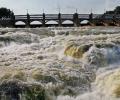
Farmers organisations and pro-Kannada organisations staged protests in Mysuru, Mandya, Bengaluru and other parts expressing their anger and urging the state government not to release water to Tamil Nadu.

The southwest monsoon has started on a weak note and this has delayed the sowing of kharif crops. Though a cause for concern, the situation hasn't reached a stage where it warrants any panic response. Moreover, according to meteorologists and industry players, monsoon rains will witness a revival in the coming few weeks.
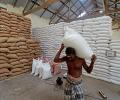
Amid the ongoing festival season and ahead of the elections for five state assemblies, the Centre is closely monitoring inflation, particularly in food items, to enable it to take steps to increase their supplies. "There is a complete no-nonsense attitude when it comes to food inflation, and instructions have been issued at all levels to be very sensitive to any possible price movements in any commodity," a senior official explained. Sources have said that all departments dealing with food items have been instructed to keep a close eye on all commodities and maintain a weekly record of their price movements.

Fresh snowfall disrupted normal life in Jammu and Kashmir, where an avalanche warning was issued in five districts, higher reaches and tribal areas of Himachal Pradesh and the Garhwal region of Uttarakhand on Monday.

The national capital has been witnessing an incessant spell of light to moderate rain for the past two days.

With the cooling down of heatwaves as the monsoon spreads across the country, power demand has fallen by 12.5 per cent from the start of this month till Monday. Peak power demand of the country had touched a record of 210 Gw last week, mostly due to rising temperatures and opening up of the economy. Compared with the beginning of this month, almost all states have seen a fall in power demand. Punjab, however, is an exception where the power demand on Monday was 17 per cent higher than on June 1.

The tea industry's cup of woes brimmeth - scanty rainfall and pest attacks have dragged down production in May, prices are lower than last year, and demand from some export markets is muted. Production in North Bengal - comprising the Dooars, Terai, and Darjeeling - is majorly affected; parts of Assam are also hit. Arijit Raha, secretary general, Indian Tea Association (ITA), said that the Tea Board numbers for April show a crop loss of about 9 per cent for North Bengal, compared to last year.

The India Meteorological Department said the southwest monsoon further advanced into Delhi, Uttar Pradesh, Himachal Pradesh, Jammu and Kashmiri, some parts of Punjab, Haryana and Rajasthan on June 30.

Non-basmati white rice accounts for nearly 25-30 per cent of total rice exported from the country.
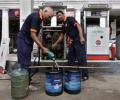
India's fuel demand in September rose at the fastest pace in more than a decade.

Delhi is likely to receive the first monsoon showers on June 30 or July 1, India Meteorological Department (IMD) officials said on Tuesday.
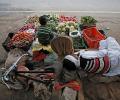
Elevated food price-led inflation could become a sore point for markets, which they seem to be ignoring at current levels, observe analysts. Retail inflation in India - as measured by the Consumer Price Index (CPI) - came in at a three-month high of 6.52 per cent in January 2023, compared with 5.72 per cent in December and 5.88 per cent in November 2022. The inflation print for February, according to Madan Sabnavis, chief economist at Bank of Baroda, will be critical for the Reserve Bank of India's monetary policy committee.

After becoming active over the rice-growing Indo-Gangetic plains, the southwest monsoon might witness weak phase for the next 3-4 days over the already rain-deficient region. So far, the main deficit states are Uttar Pradesh (-42 per cent), Bihar (-36 per cent), Jharkhand (-48 per cent), and West Bengal (-24 per cent). According to private weather forecasting agency Skymet, rains in west UP, Punjab, Haryana, Bihar, and Jharkhand are expected to be weak in the next 3-4 days before again picking pace.

The weather department has said that the skies are expected to be partly cloudy for the next few days in Delhi.

The list of drought-hit taluks will be notified, following Chief Minister Siddaramaiah's approval.

'The last time we had such a late withdrawal of monsoon was in 1960 or so.'

The total rainfall till now is not only deficient, but is also erratic in terms of both geographical spread and timings.

Vegetable rates may ease from September, led by tomato prices, which have started showing signs of correction on the back of increased supply, Reserve Bank of India (RBI) Governor Shaktikanta Das said on Wednesday. "Looking ahead, the spike in vegetable prices in July is starting to see a correction, led by tomato prices. "New arrivals of tomatoes in mandis are already softening the prices, coupled with proactive supply management in the case of onions.

According to officials, ten men and three women died and 28 head of cattle perished in cyclone related incidents despite authorities evacuating as many as 81,948 people to 471 relief centres in Cuddalore, Nagapattinam, Ramanathapuram, Thanjavur, Pudukottai and Tiruvarur districts.
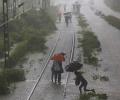
This year, the monsoon was above normal in almost all parts, except in North-West India, which comprises the major grain producing states of Uttar Pradesh, Punjab, Haryana, Rajasthan, along with states such as Himachal Pradesh, the NCR, Uttarakhand, and J&K.

'Its people are either victims of corruption or witnesses to it.'
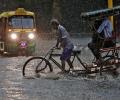
Though early days, meteorologists point towards a neutral La Nina during the initial phase of the four-month monsoon season this year that starts from June. If this holds true, by the time the rains hit the mainland, it could mean there would be one less reason to worry about the prospects of the monsoon this year. Weathermen said making any accurate prediction of how El Nino will behave and what impact it can have on the progress and distribution of rains is difficult to say at this point. A clear picture will emerge around late May or early June.

It could add to pressure on inflation, especially food inflation, which was already high, it said.
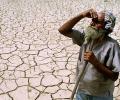
Poor rainfall has also depleted water reservoirs levels, which is likely to impact the winter crops.

Rajasthan, Maharashtra, Gujarat, Karnataka, Haryana and Punjab have sought Central assistance for drought mitigation across various sectors including feed and fodder, Minister of State for Agriculture Charan Das Mahant said in a written reply to Lok Sabha.

Technology and prudent practices can ensure that crop output does not suffer in years of drought.
An Indian think-tank, which aims to forecast the annual rainfall based on an analysis of historical data said on Wednesday that the overall monsoon this year would be 15 per cent below the 120-year long-term average.\n\n\n\n

The minister said production of fodder has dipped due to severe drought conditions in various parts of the country affecting the livestocks population.

RBI is scheduled to announce monetary policy on Tuesday.
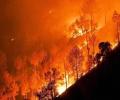
The reasons behind a spate of forest fires in the hills this year, though, could be multi-fold.

India's current account deficit is expected to deteriorate in the current fiscal on account of costlier imports and tepid merchandise exports, according to the Finance Ministry's monthly economic review. The review released on Thursday by the ministry also said that global headwinds would continue to pose a downside risk to growth as crude oil and edibles, which have driven inflation in India, remain major imported components in the consumption basket. For the present, it said, "their global prices have softened, as fears of recession have dampened prices somewhat. This would weaken inflationary pressures in India and rein in inflation."

Metal stocks also had a good session, with JSW Steel zooming by 7%, and Tata Steel and Nalco gaining about 3% each.

A fresh spell of heatwave is likely to begin over northwest India from May 7 and over central India from May 8, the India meteorological department said on Thursday.
